
Roof waterproofing in Gauteng: comparing repairs, membranes and replacement
Roof waterproofing in Gauteng: comparing repairs, membranes and replacement
A ceiling stain can make a roof problem feel urgent, but it does not identify the best repair on its own. Water may enter at a junction, travel beneath a covering and appear inside some distance away. A coating applied over the visible area, a targeted flashing repair and a larger membrane replacement address different conditions and should not be compared by price alone.
For Gauteng property owners, a useful comparison starts with the type and condition of the roof, the source of water entry, drainage and access. It also considers how long the work will disrupt the building and what remains uncertain until the affected area is opened.
This guide compares common roofing and waterproofing options. It is general information, not a diagnosis or an instruction to work at height. Roof inspection and repair require competent people and appropriate safety arrangements.
Start with the roof and the evidence
A tiled pitched roof and a low-slope roof do not manage water in the same way. A tiled roof relies on the covering and its associated details, including junctions and drainage. A low-slope area may use a continuous waterproofing system connected to upstands, outlets and penetrations. The repair must suit the actual construction.
A leak can involve damaged tiles, deteriorated flashing, blocked drainage, a failed membrane or another issue. The visible interior mark is a reason to investigate, not proof of one particular cause. The contractor should explain what was inspected, what evidence supports the recommendation and what could not be seen.
Provide the property's location, photographs taken safely, the affected room and a description of when water appears. Mention previous repairs and whether the issue occurs only during particular rainfall conditions. Do not climb onto a roof or enter an unsafe ceiling void to collect information. Where water is close to electrical equipment, keep clear and seek appropriate help.
The US Environmental Protection Agency's moisture guide recommends fixing water problems and maintaining gutters. It offers general moisture advice, not a diagnosis or an approved local roof specification.
Targeted repair versus a larger intervention
A targeted repair addresses a defined defect or limited area. It may be appropriate when the cause is reasonably understood, access is practical and the surrounding roof remains suitable. Examples depend on the roof and could include replacing a damaged tile, repairing a relevant junction or correcting a local section of waterproofing.
The potential advantage is a narrower scope and less disruption. Its limit is that it does not renew the entire roof. If the surrounding system is deteriorated, the proposed patch is incompatible with the existing material, or the source remains uncertain, a small repair may not be the best value.
A larger intervention may be appropriate where damage is widespread, the underlying surface needs substantial work or the existing system cannot accept a reliable repair. It can involve more access, preparation, waste and disruption. Ask why the contractor recommends the proposed extent and what conditions would change that recommendation.
Neither option should be sold as universally best. Compare the area to be repaired, evidence of condition, preparation, junctions, drainage, expected disruption and warranty terms. Ask how unexpected damage will be priced and approved after work starts.
Tile replacement and tiled-roof repairs
A damaged or displaced roof tile can be one possible route for water entry. An assessment should consider the surrounding covering and relevant junctions rather than assuming that the visible tile is the only issue. The roof's age and the availability of matching tiles may also affect the options.
Selective replacement can be practical when the defect is local and compatible tiles are available. The contractor should consider access and the condition of the surrounding area. A new tile may not match an older weathered roof exactly. Ask whether the quoted work includes sourcing, disposal and checking adjacent details.
If many tiles are damaged or the supporting construction requires attention, a broader scope may be needed. A recommendation for replacement of a larger area should explain the observations behind it. Conversely, a single repaired tile should not be represented as a guarantee for every other part of the roof.
Ridges, roof-to-wall junctions, penetrations and gutters are separate details that may need assessment. Ask whether they are included in the price. A repair to the covering alone may not address a defect at another location.
Flashing repairs versus surface coatings
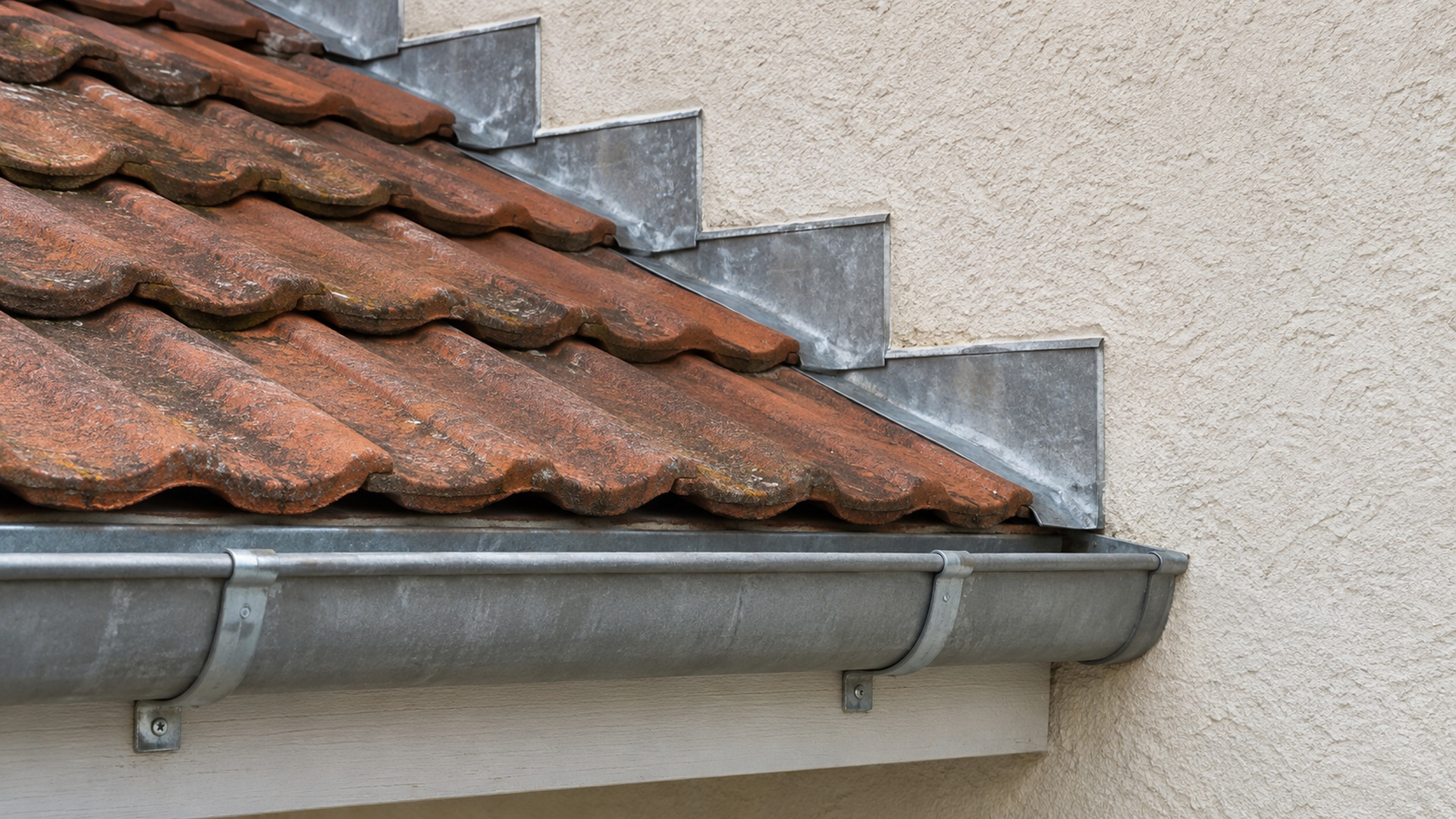
Flashing helps manage water at relevant roof junctions and penetrations. If a leak is associated with a roof-to-wall connection, chimney or similar detail, the repair needs to address that connection in a way suited to the roof and materials. Covering an unrelated broad surface is not a substitute for identifying the affected detail.
A targeted flashing repair may be appropriate where the defect is local and the surrounding construction is sound. Its scope can include access, preparation and treatment of the junction. The exact detail depends on the installation; a photograph alone cannot prove that concealed overlaps or connections perform correctly.
A surface coating can have a role within a suitable system where the substrate, exposure and manufacturer requirements support its use. It should not be assumed compatible with every existing membrane, tile or metal surface. Preparation, moisture condition, primers and application conditions may all affect the result.
Ask the contractor to explain how the selected system treats edges, penetrations and transitions. Request product information and ask whether the existing surface is suitable. A quote that simply says “waterproof roof” does not make these details clear.
Liquid-applied and sheet membrane systems
Liquid-applied waterproofing is applied to a prepared surface and forms a continuous layer when used as part of an appropriate system. Sheet-based systems use a manufactured membrane installed with the relevant laps, joints and detailing. Torch-on membranes are one form of sheet system, but not every sheet product is installed using heat.
The choice depends on the roof, substrate, existing materials, access, exposure and the specific products. Liquid systems may be convenient around some complex details, but their performance still depends on preparation, coverage and continuity. Sheet systems also require careful treatment of joints, upstands, outlets and penetrations. Neither method is automatically suitable for every roof.
Torch-on work introduces fire risks and requires appropriate competence, equipment and precautions. The property owner should ask about access, protection of surrounding materials and the contractor's safe work arrangements. It is not a task for an untrained occupant.
Compare complete systems rather than product names alone. What preparation, primer, reinforcement or additional layers are specified? How are outlets and edges treated? What conditions must be met before application? Is the product compatible with the existing roof? Ask for the relevant manufacturer's instructions and the warranty terms.
Drainage is part of the comparison
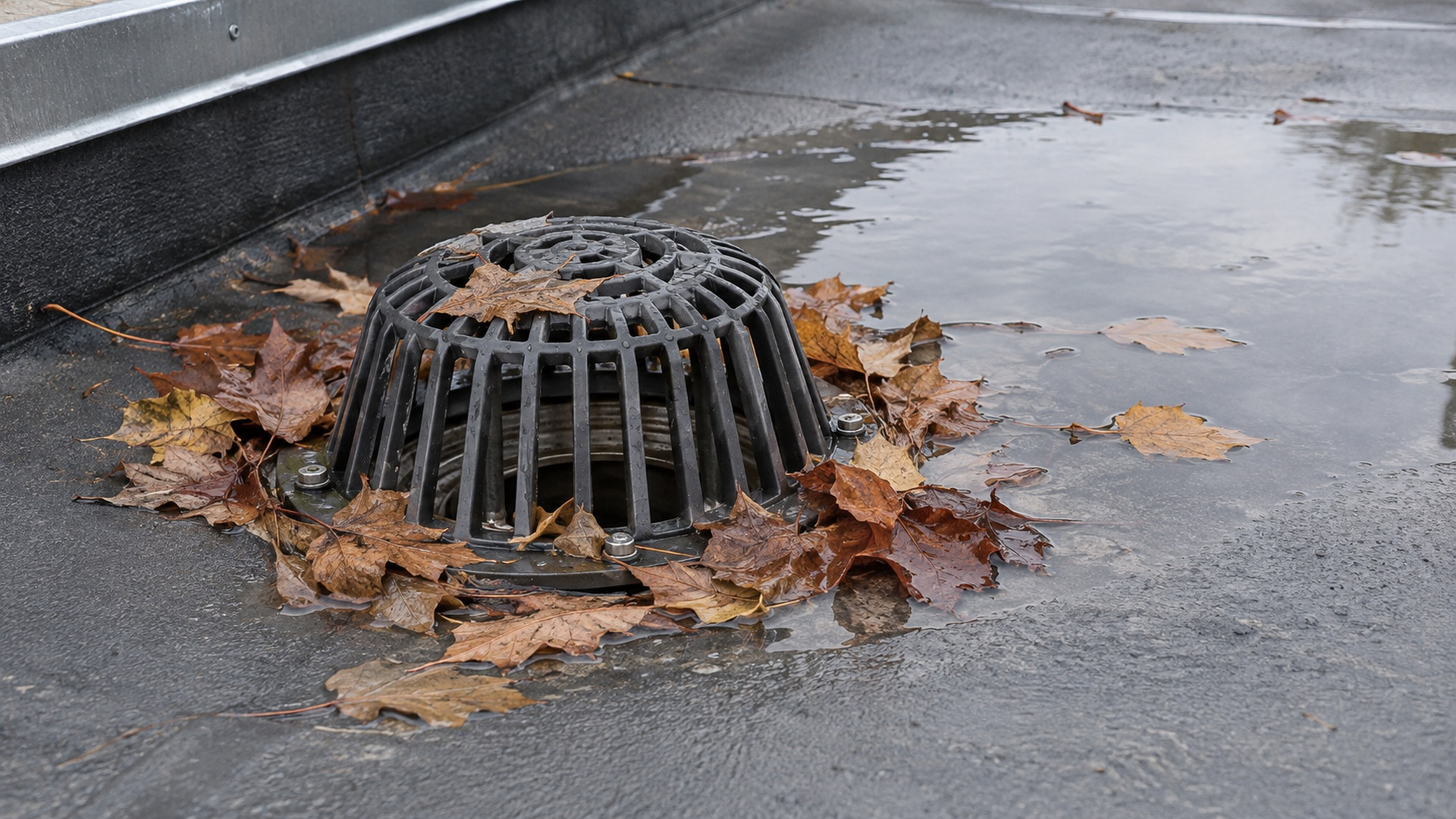
A new waterproofing layer cannot be assessed in isolation from the way water reaches and leaves the roof. Outlets, gutters and downpipes need appropriate attention. Debris or damage may affect drainage, while the roof's geometry and existing falls also matter. A photograph of standing water alone does not establish its cause.
Ask whether gutters, outlets and accessible downpipes are included in the inspection and whether cleaning or repair is part of the quotation. For low-slope roofs, discuss the condition of drainage points and connections to the waterproofing. Corrective design or alterations may require specialist input and should not be assumed to be included in a surface repair.
A property with recurring debris may benefit from a maintenance plan suited to its surroundings. The frequency should reflect the roof, access and exposure. Do not arrange unsafe do-it-yourself access to clean a roof or gutter; use competent people with suitable safety arrangements.
Where several parties control different parts of a building, identify who is responsible for roof areas and rainwater systems. A tenant's report is useful, but the person authorised to arrange the assessment and approve work must also be identified.
Preparation can change the price and programme
Waterproofing products are installed on a surface that must be suitable for the selected system. Loose material, contamination, moisture or damage can require preparation or repair before application. The required steps depend on the products and existing roof.
Ask whether cleaning, removal of unsound material, substrate repair and any primer are included. What happens if the existing layer is found to be incompatible? Is the price fixed for a defined area or based on an allowance? A contractor may need to inspect or open an area before the full scope is known.
Weather and drying conditions can affect the programme. A realistic schedule allows for the product requirements and site conditions. Ask how the building will be protected if work is interrupted and how the contractor will communicate changes. A promise to complete a coating regardless of conditions is not a substitute for following the selected system's instructions.
For an occupied property, plan access, noise, deliveries and protection of rooms beneath the work. Confirm whether internal ceiling or paint repairs are included or require a separate scope after the water problem has been addressed and the area is ready.
Compare warranties as well as quotations
A product warranty and a workmanship warranty are not necessarily the same. Ask who provides each one, what is covered, how long it applies and which conditions or exclusions matter. Some warranties may depend on the use of a complete system, proper maintenance or authorised installation.
A longer period is not automatically better if the scope is unclear. Find out whether the warranty covers only the repaired area or a larger system, how a concern must be reported and whether subsequent alterations can affect it. Keep product information, photographs, invoices and the written terms together.
Compare quotations on the same basis. One may cover investigation and a local repair; another may include replacement of a larger area and drainage work. Ask for the evidence, scope, exclusions, access plan, cleanup and payment terms before judging the difference in price.
If a contractor cannot inspect a concealed area until work starts, agree how the finding will be reported and approved. A clear change process helps prevent an estimate based on limited information from being mistaken for an unconditional fixed price.
Record the repair for the next inspection
A roof repair is easier to maintain when the owner knows what was done and where. Ask for a description of the repaired area, the system or materials used, relevant photographs and any maintenance instructions. Keep these with the quotation, invoice and warranty. If a later contractor needs to investigate a leak or add equipment, that record can help them understand the existing work before making changes.
The record should also identify areas that were not accessible or were excluded from the assessment. An image of the finished surface cannot establish the condition of every concealed layer. If water returns, record the date, location and conditions and contact the responsible provider promptly. The next investigation can then consider the new evidence alongside the earlier work, without assuming that every leak has the same source.
Choosing the practical next step
A sound decision connects the visible symptom with an appropriate investigation, a repair suited to the roof and a plan for drainage and future maintenance. A targeted repair can be appropriate when the evidence supports it. Replacement may be justified when the wider system is unsuitable or deteriorated. The decision should be explained for the actual building.
Building Companies offers roof repairs and waterproofing services in Gauteng. To discuss a leak or damaged area, request an assessment with the location, history and photographs obtained safely. The team can discuss the next practical step before work begins.