
How technology is changing electrical inspections and repairs in Gauteng
How technology is changing electrical inspections and repairs in Gauteng
Electrical installations are being asked to support changing ways of living and working. Home offices, additional appliances, security systems and new lighting arrangements can all alter how a property is used. At the same time, electricians have access to diagnostic instruments and recording methods that can make an assessment more informative.
For property owners in Gauteng, the most useful question is not whether a tool is new. It is what information the tool can provide, what its limits are and how the findings lead to a safer, more appropriate repair. A modern instrument cannot replace a competent professional, and a digital report cannot turn an untested installation into a compliant one.
This article explores several technologies and practical developments that may feature in electrical inspections, fault finding and maintenance. It also explains what to ask when comparing services and how a Certificate of Compliance fits into the process.
Better information starts with the reported problem
A diagnostic instrument is most useful when the electrician understands what the property user has experienced. A circuit that trips when a particular appliance starts may need a different investigation from lights that flicker throughout a building. Intermittent problems can be especially difficult because the fault may not be present at the moment of a visit.
Record where the problem occurs, when it started and whether it affects more than one room or device. Note whether any recent alterations were made and whether the issue follows a particular pattern. A photograph of an error message or an exterior view of a fitting may help communicate the concern, but it is not a diagnosis.
Do not open electrical covers or handle damaged equipment to collect information. If you notice smoke, a burning smell, exposed conductors or a shock, keep people away and seek urgent help from an appropriate professional or emergency service. Repeatedly resetting a tripping device is not a substitute for finding the cause.
The electrician can then decide what can safely be inspected and tested, which instruments are appropriate and whether the installation or affected equipment must be isolated. Accurate information from the occupant supports that work without requiring the occupant to perform it.
Digital test instruments support measurements
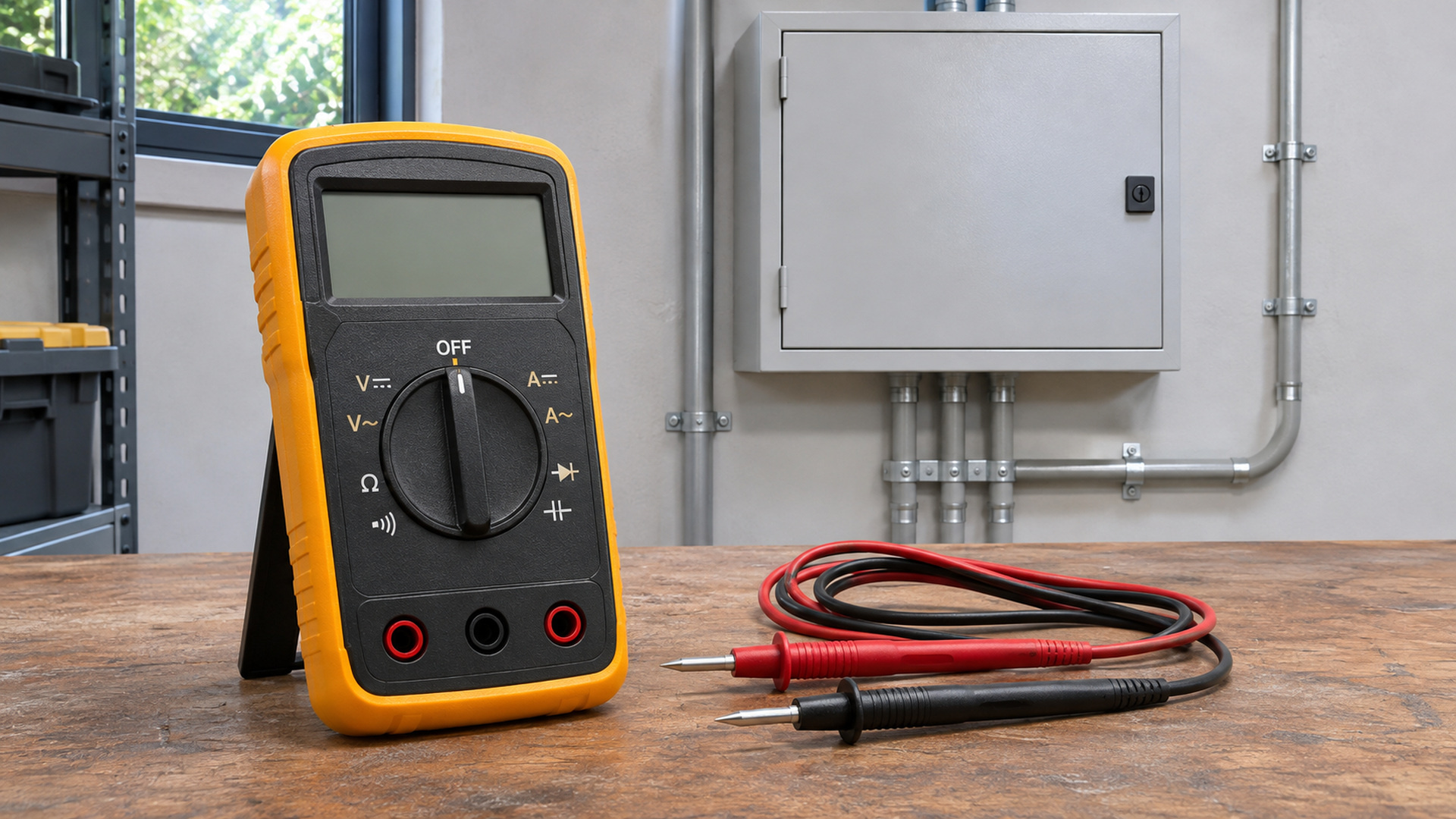
Electrical professionals use purpose-designed instruments to measure different properties of an installation. Depending on the task, these can include voltage, continuity, insulation resistance and the performance of protective devices. The correct test, instrument settings and interpretation depend on the installation and the work being done.
A digital display can make a measurement easier to record, but a number on a screen does not explain the condition by itself. A competent person must know what is being measured, whether the instrument is suitable, how the result relates to the applicable requirements and whether the test has been carried out safely.
Test equipment also needs appropriate maintenance and verification. Ask the contractor how testing forms part of the scope and what findings will be shared. For a more involved assessment, request a written explanation of defects, recommended work and any limitations where access or conditions prevented a full inspection.
Do not compare two services solely by the number of instruments shown in a photograph. A useful assessment is defined by the inspection and tests appropriate to the installation, the competence of the person doing them and the quality of the resulting information.
Insulation testing helps investigate one part of a system
Insulation separates conductors and helps prevent unintended current paths. Damage or deterioration can arise for different reasons, and its presence cannot always be determined by looking at the outside of a cable. An electrician may use insulation resistance testing as part of an appropriate inspection or fault investigation.
This test is not a general-purpose button that property users should operate. It may require equipment to be disconnected and parts of an installation to be isolated before testing. Sensitive electronics and other connected equipment need appropriate consideration. The registered professional decides the safe procedure and interprets the results.
For an owner, the practical questions are straightforward: what was tested, what did the result indicate, and what further work is recommended? A failed or inconclusive result may require further investigation before a particular cable or fitting is identified as the cause. An acceptable result also describes the condition at the time and scope of that test, not a guarantee against every future defect.
In an occupied home or office, arrange for any necessary shutdown and protect data or equipment according to your normal procedures. Let the contractor know about devices that cannot be interrupted without coordination.
Testing protective devices is different from resetting them
Protective devices have different functions, and their suitability depends on the installation. When a device trips, it has responded to a condition or fault; the cause needs investigation rather than an assumption that the device itself is defective. Replacing it with a higher-rated device simply to stop nuisance interruptions can be dangerous and must not be treated as a generic solution.
A qualified electrician can use suitable instruments and procedures to test relevant protective functions. A property user may have manufacturer instructions for an accessible test button, but that does not replace a professional inspection or authorise opening the distribution board. Follow the equipment instructions and seek professional advice if a device does not respond as expected.
When discussing an inspection, ask which parts of the installation are included and whether the contractor will provide a record of findings. For a recurring trip, share the circumstances and affected appliances. The electrician may need to investigate the fixed installation, connected equipment or both before recommending a repair.
Good reporting distinguishes a finding from a diagnosis. “This circuit trips” is an observation. “The protective device must be replaced” is a conclusion that requires appropriate evidence.
Thermal imaging can help direct attention
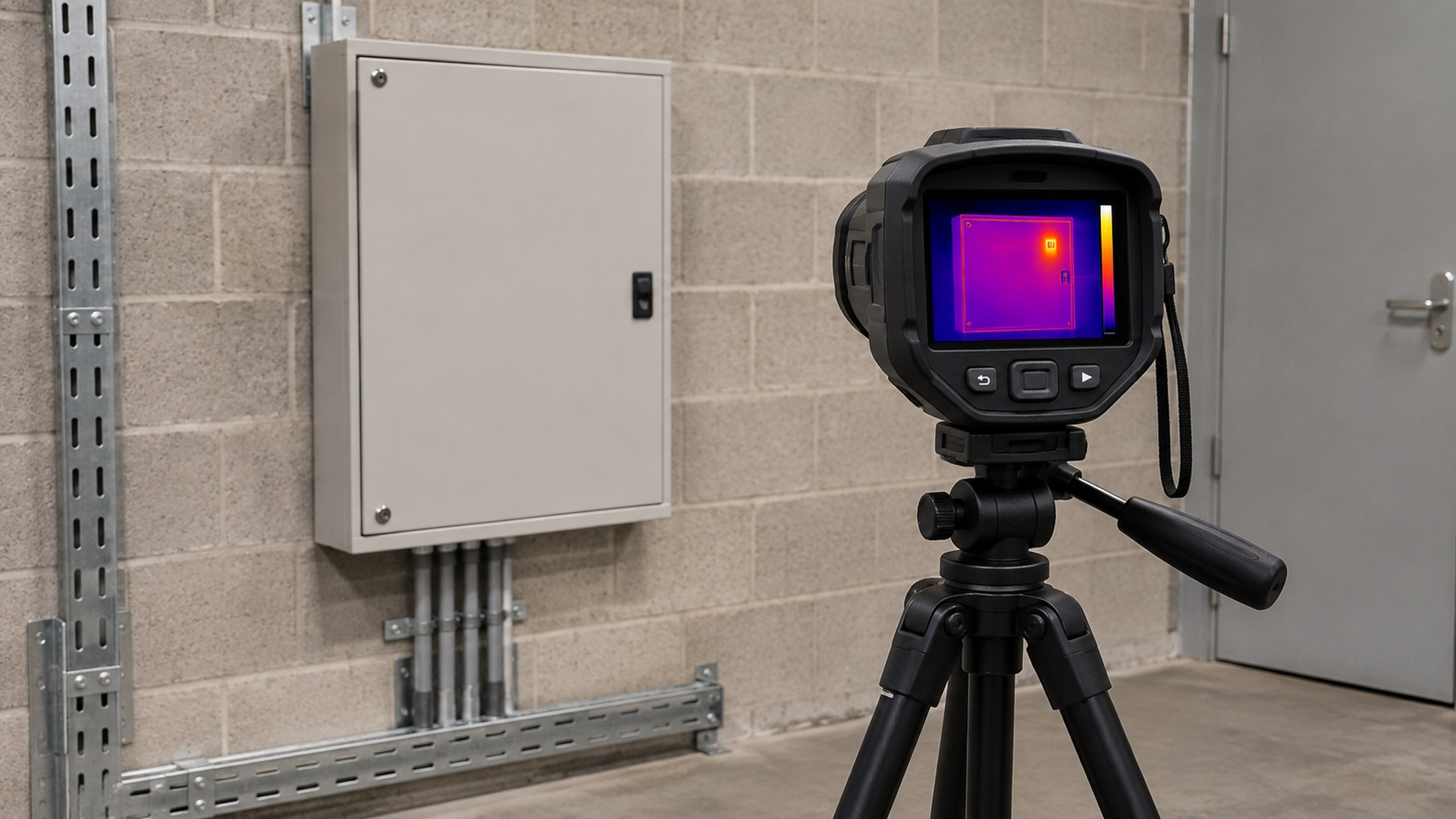
A thermal camera displays surface temperatures and can help a trained professional identify an unusual temperature pattern under appropriate conditions. It may be useful alongside other observations when investigating equipment or connections. It does not see through walls, reveal every hidden defect or automatically establish why an area is warm.
The interpretation depends on factors such as load, access, the material being viewed and the conditions during inspection. A component that is not carrying its normal load may not show the same pattern it would during a busy period. Reflections and differences between surfaces can also affect what an image appears to show.
Ask what a thermal survey includes, when it will be performed and how any finding will be confirmed. A coloured image alone should not be presented as proof that a particular component has failed. Additional inspection, measurement or investigation may be needed, and any electrical work must be performed safely by the appropriate professional.
Thermal imaging is an example of a tool that can improve information when used for a defined purpose. It should not be sold as a guarantee that an installation is fault-free or as a replacement for required testing and certification.
Monitoring can reveal patterns that a short visit misses
Some electrical problems are intermittent. A voltage disturbance, unusual load or repeated interruption may not occur while an electrician is present. Depending on the circumstances, a professional may recommend temporary monitoring or a power-quality assessment to capture information over a longer period.
The scope should identify the question being investigated, the proposed monitoring period and what the resulting report will show. For example, a business may want to understand when interruptions occur and whether they coincide with particular operating conditions. The monitoring result still needs interpretation; a correlation does not automatically establish the cause.
Before equipment is installed, agree on access, data ownership and whether any interruption is required. Ask whether the quoted price includes analysis and a follow-up explanation, or only the placement of a recorder. If the installation requires specialist expertise, confirm who will perform the work and how findings will be handed over.
Not every tripping circuit requires a long-term monitoring project. A straightforward fault may be identified through an ordinary assessment. The right level of investigation is the one that answers the actual question without omitting necessary safety work.
Digital records can make maintenance clearer
A photograph, annotated diagram or electronic report can help an owner retain useful information after the electrician leaves. Records may show the location of work, the nature of a reported defect, the scope completed and recommendations for follow-up. For a property manager responsible for multiple premises, consistent records can also make it easier to identify which items remain outstanding.
The value is in accuracy and context. A photograph of a tidy distribution board does not demonstrate that the circuits behind it are safe or compliant. A digital checklist cannot replace the required inspection and test report. Ask the contractor to distinguish completed work, observations, limitations and recommendations.
Keep records with quotations, invoices, certificates and any later alterations. Make sure the authorised person responsible for the property can locate the current documentation. In a rental or shared commercial building, clarify which party holds the installation records and who must be notified of changes.
Digital records may contain photographs of private spaces or operational details. Agree on access and sharing arrangements appropriate to the property. A clear record should help future work without collecting unnecessary personal information.
A CoC remains a formal inspection and certification process
A Certificate of Compliance, commonly called a CoC, is not simply a document produced by an app. The Department of Employment and Labour advises property owners and businesses to use competent, legally registered electrical contractors, and states that a CoC must follow proper inspection and testing. See the department's notice on electrical installation compliance.
The government's explanatory notes on the Electrical Installation Regulations describe the role of a registered person, inspection and testing, and the associated test report. Requirements depend on the installation and circumstances; a contractor should explain the applicable scope and documentation for the actual property.
Ask who will carry out the inspection, who is the registered person responsible for certification and whether remedial work is included in the initial price. A quotation for an assessment may not include every repair discovered during it. Request a written explanation of defects and the approval process for additional work.
A valid certificate should be retained with its test documentation. It does not guarantee that later damage, unauthorised alterations or a new fault can be ignored. If the installation is changed, ask the responsible professional what documentation is required for that work.
New equipment changes the questions property owners should ask
Adding equipment can change how an installation is used. An extra workstation, a new appliance or a different room layout may require a professional to consider the existing circuits and proposed demand. The number of visible sockets alone does not establish the available capacity or the suitability of the installation.
Provide the electrician with the proposed equipment, its location and how it will be used. Ask whether an assessment, additional circuits, alterations or other work are needed. If an upgrade affects shared areas or a leased property, identify the person authorised to approve it and obtain the necessary access.
Do not assume that an adapter or extension lead is an adequate permanent solution to a shortage of conveniently placed outlets. The appropriate solution depends on the load, existing installation and applicable requirements. A contractor can assess these factors and explain the options.
The same principle applies to smart switches or monitoring devices. A convenient interface does not remove the need for a suitable installation, safe isolation and competent work. Ask about compatibility, ongoing access to the controls and what happens if the device or its network connection fails.
How to compare inspection and repair quotations
A useful quotation explains what will be assessed, what is already known and what remains uncertain. A price for a call-out and diagnosis is different from a price for a defined repair. A CoC inspection may identify defects that require a separate quote before certification can proceed.
Compare labour, testing, materials, access, making good and documentation. Ask whether a shutdown is expected, how long it may last and how any unexpected finding will be reported. For a business, clarify whether after-hours work carries an additional cost. For a home or rental, agree who will be present and who can approve the work.
Check the contractor's registration and ask for the identity of the registered person responsible for any certificate. The department has warned against unregistered electrical contractors. Request appropriate proof and verify it through official channels if necessary.
A contractor should be able to explain why a particular instrument or investigation is recommended and what it can reasonably establish. More technology is not automatically better value; clear scope and competent interpretation are more useful than a long equipment list.
Prepare for a practical assessment
Give the contractor the address, access details and a concise description of the symptoms. Share relevant previous reports and explain any recent work. For intermittent issues, provide a timeline and note which activities or equipment were involved. Avoid handling unsafe fittings or attempting to expose hidden wiring to make a better photograph.
Ask how to prepare for an interruption and who will coordinate with occupants or neighbouring tenants. If important equipment must be shut down, follow its manufacturer's procedures and arrange a suitable time. The electrician is responsible for the safe electrical work; the property user should coordinate the operational impact.
After the visit, request an explanation of what was found, what was repaired and what remains outstanding. Keep the appropriate documents in a safe, accessible place. If a fault returns, report the new symptoms and refer to the earlier work rather than assuming the cause is known.
Building Companies offers electrical inspections, repairs and CoC support in Gauteng. To discuss a fault or planned upgrade, request an assessment with the property details and a description of the issue. The next step can then be agreed for the actual installation.